The photovoltaics (PV) industry is facing almost unprecedented turbulence. Following the rapid market development that occurred after the 2022 energy crisis, new obstacles have emerged that are hindering further PV deployment. Especially when it comes to regulation, the German government lacks a clear, goal-oriented framework for the industry and the ambition to drive further expansion.
In addition, Germany’s mature solar market is facing structural challenges: Especially the erosion of the PV market value due to price cannibalization and shortcomings at grid-level are hindering the continuous advancement of renewable deployment.
Through its latest draft bills (EEG amendment and grid package), the Federal Ministry for Economic Affairs and Energy is planning to make the following changes, amongst others:
Industry associations argue that this will further complicate investment conditions for solar projects, and rightly so.
The market situation for large-scale PV plants is becoming increasingly difficult in terms of revenue and financing. There are several concurrent factors contributing to this:
What solutions is the market offering? How can business models for large-scale PV plants be adapted to provide more stable revenues and easier financing of projects?
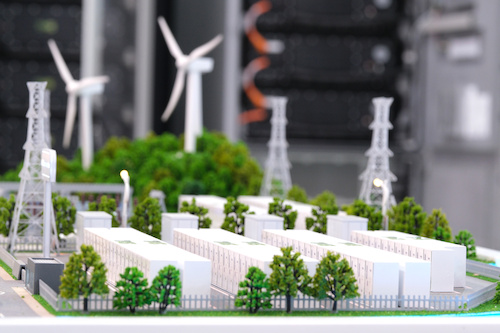
In the future, PV projects will be developed to enable flexible supply at certain times – rather than to merely generate as much electricity as possible. Currently, the most important market-ready solution to deal with negative electricity prices is the hybridization of PV systems with battery energy storage systems (BESS). Storage systems can cap generation peaks, shift revenues to different times and mitigate price risks – all of which are clear advantages in terms of profitability and bankability. This will lead to changes in the market for power purchase agreements (PPAs). Increasingly, PPAs are being replaced by hybrid PPAs, which do not just charge for the volume of electricity but also for flexibility. Utilities currently have the upper hand as off-takers because they unite electricity purchasing, marketing and flexibility assessment. The industry’s concrete task now is to define new products and standards. This includes answering the question of how to create a sound contract for hybrid PPAs that include two types of assets (PV and BESS).
Although hybrid PV systems are expected to become the industry standard, the ramp-up will take time. At the end of 2024, fewer than one percent of PV installations in Europe (EU 27 plus UK and Switzerland) were combinations of PV with storage systems. With a 62 percent share, the UK dominates the European PV-BESS market, thanks to a regulatory framework that includes CFDs and capacity markets, allowing batteries to participate.
In addition to combining multiple technologies, another emerging trend is portfolio-based financing. Rather than financing PV assets individually, projects are increasingly bundled into plant pools that combine PV, wind and storage, for example. The advantage here is that the different risk profiles balance each other out, which reduces the risk of failure and boosts resilience against short-term price fluctuations. At the same time, the complexity is increasing: Investors, asset owners and project planners will need greater expertise in electricity markets and financing in order to structure and manage these types of portfolios and make them bankable. This will also allow more involvement by international investors – particularly in the large-scale storage segment, which is currently attracting strong interest from foreign banks and investors and often involves multi-layered financing models.
New mixed models are also emerging at the level of individual assets. Rather than choosing between entering a PPA or going merchant, more and more market players are turning to hybrid revenue strategies, such as a 50/50 split between PPAs and merchant sales. This approach combines a more stable cashflow with the return potential offered by taking market risks. It is already more commonly used for storage systems and is now expanding into the PV segment.
Markets for ancillary services provide additional revenue potential. Balancing power, operating reserve and reactive power can serve as short-term secondary revenue streams, improving the business case. This is especially true for projects that include storage systems because these often fulfill the technical requirements of such markets.
Last but not least, the green hydrogen ramp-up remains a key element of the system. Electrolyzers can absorb cheap renewable electricity when prices are low or even negative. This puts hydrogen and flexible loads among the options that could bolster PV market value through a rapid market ramp-up. In certain cases, they could still enable PV-only PPAs.
PV expansion is at a turning point. Falling market values, grid hurdles and political uncertainty are intensifying the pressure, while new, viable flexibility business models are emerging. The hybridization with BESS, portfolio-based financing, hybrid revenue strategies, ancillary services and the hydrogen ramp-up demonstrate how large-scale PV plants can preserve bankability even in a volatile market environment. Rather than the capacity itself, what matters most is an intelligent combination of generation, marketing and flexibility. The players driving solutions, standards and partnerships will come together at The smarter E Europe. If you are seeking to develop business models for the next generation of PV, this is where you will find the expertise and connections to make it happen.