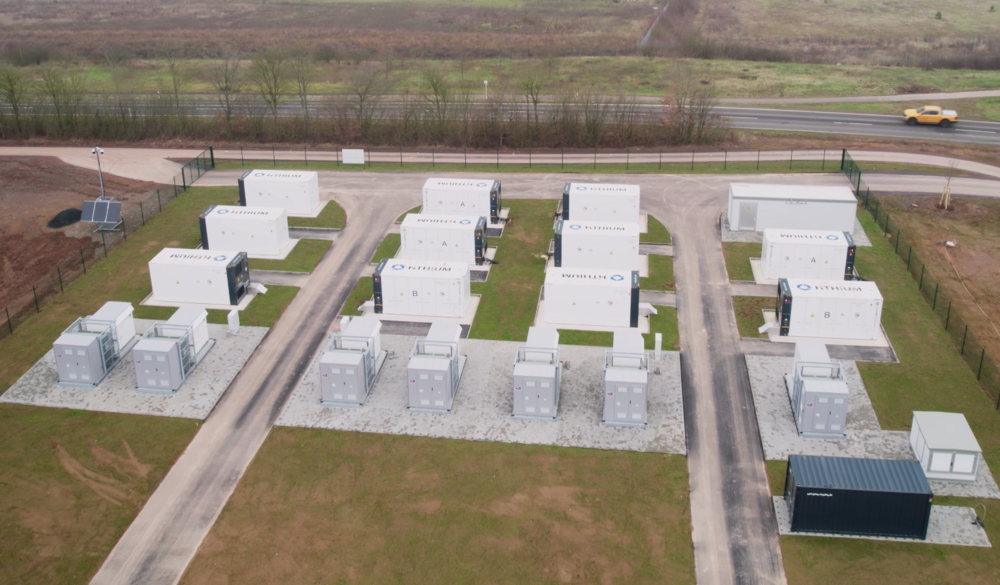
The European battery market is scaling up at record speed: According to the latest Solar+ Report from SolarPower Europe, at the end of 2025, the installed storage fleet in the EU had reached a total capacity of 40 gigawatts (GW) and a storage capacity of 77 gigawatt hours (GWh). This is an increase of over 45 percent compared to the previous year. By 2030, the study’s Solar+ scenario forecasts that capacity will quadruple to 171 GW, while storage capacity will increase eightfold to 598 GWh. As growing solar and wind capacities place increasing demands on European grids, storage systems will need to shift electricity over many hours. As a result, the average storage duration will go up from 1.9 to 3.5 hours. This represents a technological leap that underscores the need to establish more grid-relevant storage systems. Taking place in Munich from June 23–25, ees Europe will showcase how the industry is meeting this enormous demand. As Europe’s largest exhibition for batteries and energy storage systems, ees Europe brings together global market leaders. Exhibitors will showcase market-ready innovations for reducing electricity costs and stabilizing grids ranging from artificial intelligence in storage management to sodium-ion technologies. As part of the alliance of exhibitions The smarter E Europe, the event connects around 2,800 exhibitors and more than 100,000 decision makers all working towards integrating grid storage into the infrastructure of the future and making it profitable.
The European Union has less than five years left to achieve the 2030 climate and energy targets it committed to. Yet reality lags behind these ambitions: Despite the recent boom in renewable energies, the latest forecasts indicate that the EU will miss its expansion targets for wind and solar capacity if the course is not corrected. The Solar+ scenario modeled by SolarPower Europe and Rystad Energy suggests a straightforward and highly efficient solution to this problem. Consistently optimizing the system for flexibility will turn the combination of photovoltaics and battery energy storage systems (BESS) into a golden bullet. Spurred on by cost advantages and rapid deployment, solar power alone could then cover around 26 percent of Europe’s electricity demand. This would mean that the total share of renewables in the electricity mix would climb to just under 70 percent, drastically reducing dependence on fossil fuels.
Billions in savings strengthen the EU as a business location
Achieving these goals is by no means solely about climate protection; it also secures the economic future of the EU as a business location. As market participants systematically phase out expensive fossil fuel power plants, the annual operating costs of the European power system are halved in the Solar+ scenario by 2030, saving around 55 billion euros year after year. At the same time, wholesale electricity prices will drop by an EU average of 14 percent to about 63.4 euros per megawatt hour (MWh). By shifting electricity flexibly over time, grid storage systems prevent the uncontrolled proliferation of negative-price hours and thus protect the profitability of major solar investments. Furthermore, this combination of technologies makes the European economy less dependent on geopolitical circumstances. During the first two months of the recent Middle East crisis alone, the added solar power generation saved the EU 8.5 billion euros in gas import costs. In the Solar+ scenario, by 2030 this effect will amount to over 53 billion euros annually, or a cumulative 223 billion euros in avoided fossil fuel imports, improving Europe’s energy security substantially and sustainably.
Momentum may be threatened by slump in investment
The figures prove that the storage market is ready to fulfill its role in the system: In 2025 alone, a battery storage capacity of 27.1 GWh was installed in the EU, 55 percent of which were private, completely subsidy-free large-scale storage systems (BESS). However, uncoordinated regulatory interventions in member states risk stifling this momentum.
Within the European single market, all eyes are turning to Germany, where recent regulatory decisions could significantly affect the momentum of deployment. The debate about changes to the grid charge exemption for storage systems is making international investors nervous about long-term planning security. In response, more than 150 companies have joined forces and are working with policymakers to ensure reliable and investment-friendly framework conditions.Georg Gallmetzer, CEO of Eco Stor, issued an urgent warning of a domino effect: “Their reluctance to protect expectations regarding the grid charge exemption within the AgNes proceedings, the German Federal Network Agency has effectively led the storage industry into an investment slump. The Agency must urgently restore investment security, assure investors that their expectations are protected by the law and that there will be a financially viable grid charge model once the statutory exemption period expires. We have to make sure that a lack of investment does not lead to an irretrievable shortage of storage systems.” According to Gallmetzer, such a breach of trust in the EU’s largest market would send a signal across Europe and evoke memories of past industry crises: “A potential breach of trust regarding the grid charge exemption would have consequences as severe as the retroactive interventions in subsidy schemes in Spain and Italy in the 2010s. At the same time, countries like Italy and the UK demonstrate how straightforward market mechanisms, additional revenue streams and fast approval processes can foster investments. Ultimately, it all depends on a combination of market size, regulatory clarity as well as planning and investment security.”
The goal must be to firmly integrate storage into grid cost design and to shape the regulatory framework in a way that ensures that the European storage fleet can reach the 171 GW forecast in the Solar+ scenario by 2030 in a reliable and secure manner.
ees Europe 2026: Focus on flexibility and market design
The ees Europe Conference on June 22 and 23 in Munich will showcase how European industry is addressing this enormous need for transformation from both technological and strategic perspectives. The focus will be on transnational issues such as the large-scale financing of stand-alone large-scale storage systems, the successful planning of pan-European hybrid power plants, and the regulatory approach to grid charges in the transformed European energy system. At the exhibition, the ees Forum (hall C2) will serve as a platform for discussions on European law through a variety of discussion formats. Running parallel to this, the ees Innovation Hub Stage (hall B0) will be the innovative heart of the event: Here, leading European researchers and industry representatives will present state-of-the-art projects ranging from AI in battery research and best practices in the circular economy to strategies for establishing a resilient, self-sufficient battery production sector in Europe. Another highlight will be the presentation of the prestigious The smarter E AWARD in the Energy Storage category on June 22.